After six weeks living in Brazil (at the end of last year), I was glad to be home with family and friends in New York for the holidays. It was also nice to sleep in a bed again after spending most nights in Brazil in a hammock (although my side was a little sore after my first night back).


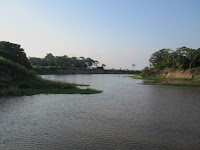
During my last weeks in Brazil, I accompanied Fabio and his team of fishermen on an expedition to survey arapaima populations across the region. For more than two weeks, we lived on a boat and visited more than 50 lakes. At each lake the fishermen counted the number of arapaima that surfaced to breathe in 20 minutes. Since arapaima need to breathe about every 20 minutes, they could estimate how many arapaima there were in each lake. Many lakes had little or no arapaima and it seemed like the lakes that were farther or more difficult to reach had more. Still, we saw and heard hundreds of arapaima come to the surface and breathe. Throughout the expedition, I walked with the fishermen and documented their work and the scenery with photos and video.




Our home for more than two weeks
During my last weeks in Brazil, I accompanied Fabio and his team of fishermen on an expedition to survey arapaima populations across the region. For more than two weeks, we lived on a boat and visited more than 50 lakes. At each lake the fishermen counted the number of arapaima that surfaced to breathe in 20 minutes. Since arapaima need to breathe about every 20 minutes, they could estimate how many arapaima there were in each lake. Many lakes had little or no arapaima and it seemed like the lakes that were farther or more difficult to reach had more. Still, we saw and heard hundreds of arapaima come to the surface and breathe. Throughout the expedition, I walked with the fishermen and documented their work and the scenery with photos and video.


We Hiked, Splashed, Crawled, and Climbed to Get to the Lakes


Once we Got to the Lake we Waited, Watched, and Listened for Arapaima
Although my plans were modified, my trip to Brazil was extremely valuable. I met, worked with, and befriended fishermen from communities where I hope to do research in the future. I was able to practice and improve my Portuguese. I saw a broad area of the floodplain– a place that is shaped by water (and increasingly by people) and sustains plants, animals (fishes included), and people. I did not see any arapaima out of water, but I saw many come to the surface and roll their backs with a splash. In some cases their greenish sides showed shades of bright red, a sign they were ready to breed. An important source of food across the Amazon, the arapaima is also a source of income for fishing communities across the Amazon. During the expedition I met the people and communities that depend on fishing resources, like the arapaima, for sustenance and income.


Photos of Houses in Various Communities


The Fishermen
I am already preparing for my return in March- reaching out to contacts and looking for additional funds to finish my work. I look forward to going back, especially after fine-tuning my research plans (and changing this blog accordingly). Before then, I'll post a few more stories and pictures from the survey expedition in the coming weeks. Enjoy!


Scenery of the Amazon and the Floodplain near the City of Santarém


